PilotWave Studio
PMO transformation, start to finish.
The context
IMT 585 is a program management and consulting course at UW. The final deliverable was a full RFP response to a fictional client, EmerGenetics, a biotech company trying to fix their Global Business Operations. We had to create a consulting firm, name it, staff it, price it across three years, and pitch it like it was real.
We called it PilotWave Studio.
The problem
EmerGenetics had 25 to 30 active initiatives running at any given time with no formal PMO, no standardized intake process, and no consistent way to track any of it. Different teams used different tools. Spreadsheets, Slack, Asana, Trello, Microsoft Project, all in different pockets. Leadership did not trust their own reports.
Three years before our proposal, they had tried to implement an enterprise project management tool. It failed. Bad change management, no executive sponsorship when adoption got hard, and a tool selected without input from the people who had to use it.
Their biggest fear going into this RFP was not failure to build a PMO. It was building one that became a bureaucratic layer instead of something that actually helped.
That context shaped everything we proposed.
The proposed solution
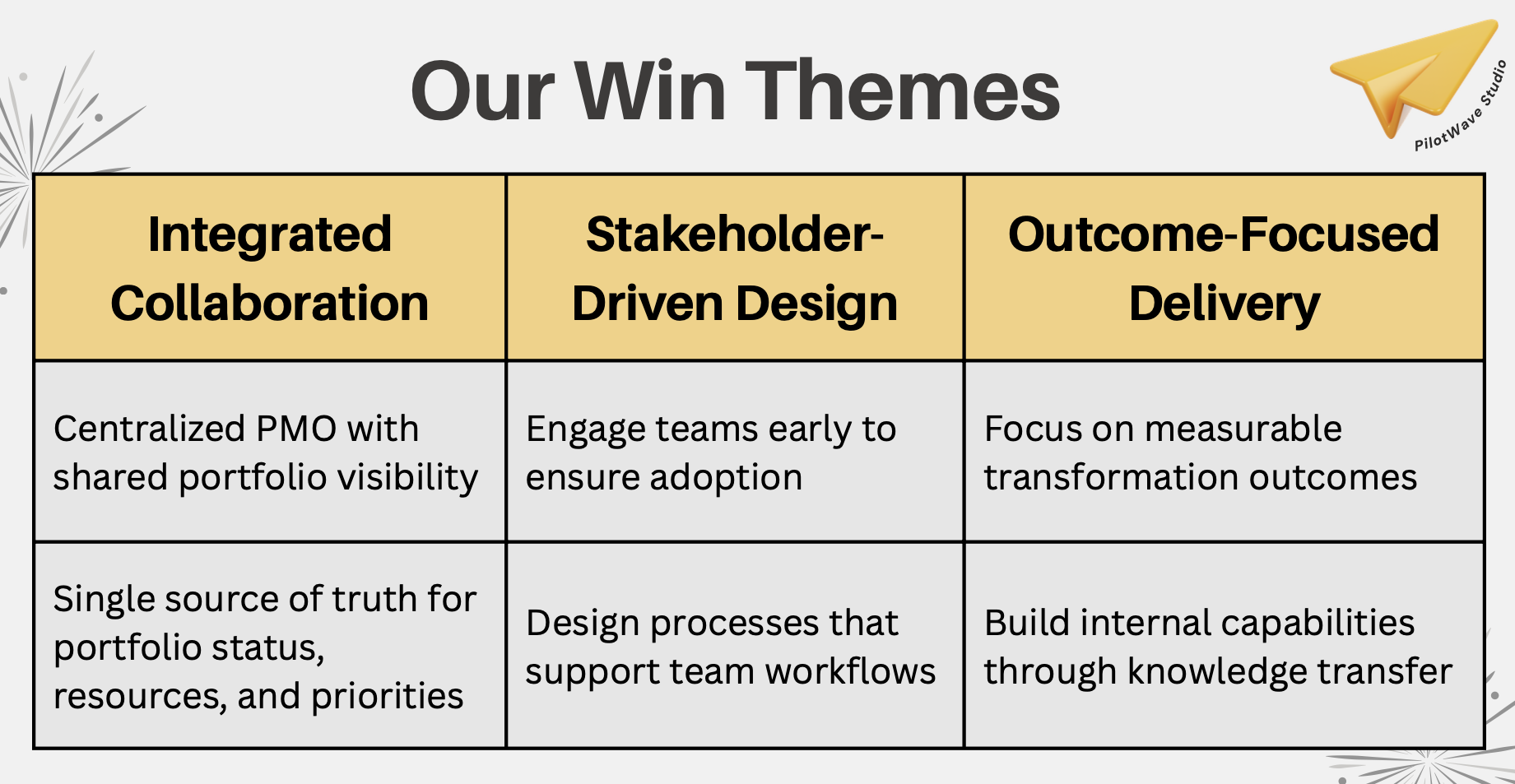
One other team member and I co-wrote the win themes and proposed solution framework. Three pillars: Integrated Collaboration, Stakeholder-Driven Design, and Outcome-Focused Delivery.
Stakeholder-Driven Design was a direct response to what killed their last implementation. You do not fix adoption problems by picking better tools. You fix them by involving people before the tools are chosen. Outcome-Focused Delivery was a direct response to their fear of bureaucracy. Every process we proposed had to tie back to a measurable business result, not just activity.
My work
I wrote the rationale for why we were responding to this RFP, which meant understanding the client's actual problem before anyone started building solutions. I also owned the delivery team structure, the governance and reporting cadence, and the recommendations section.
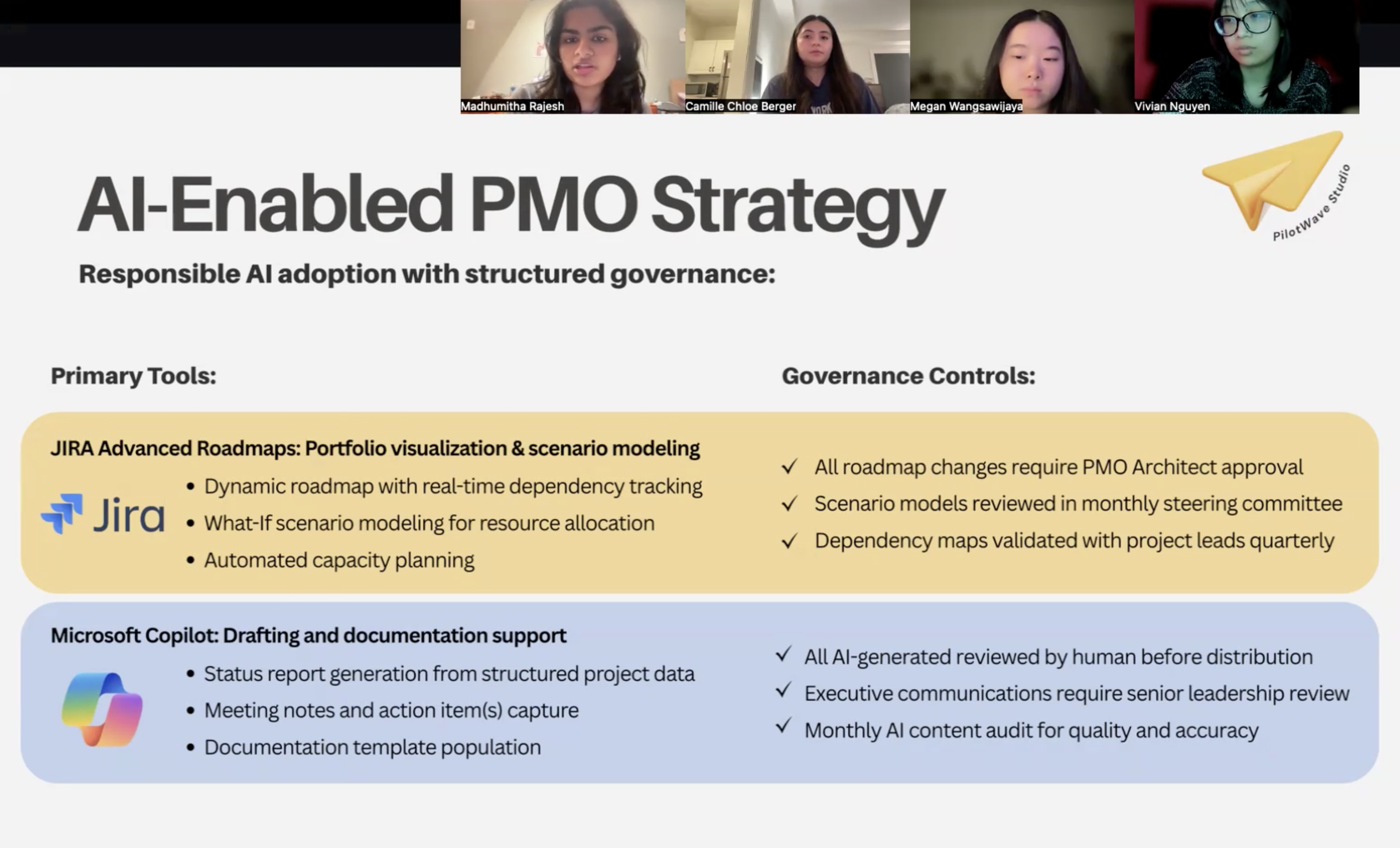
The AI governance piece was mine specifically. EmerGenetics operates under FDA regulations, HIPAA, GDPR, and SOX controls. Any AI tools touching their operations needed a real oversight structure. I designed it: what required human review, what could be automated, what needed senior leadership sign-off before distribution.
Proposed KPIs
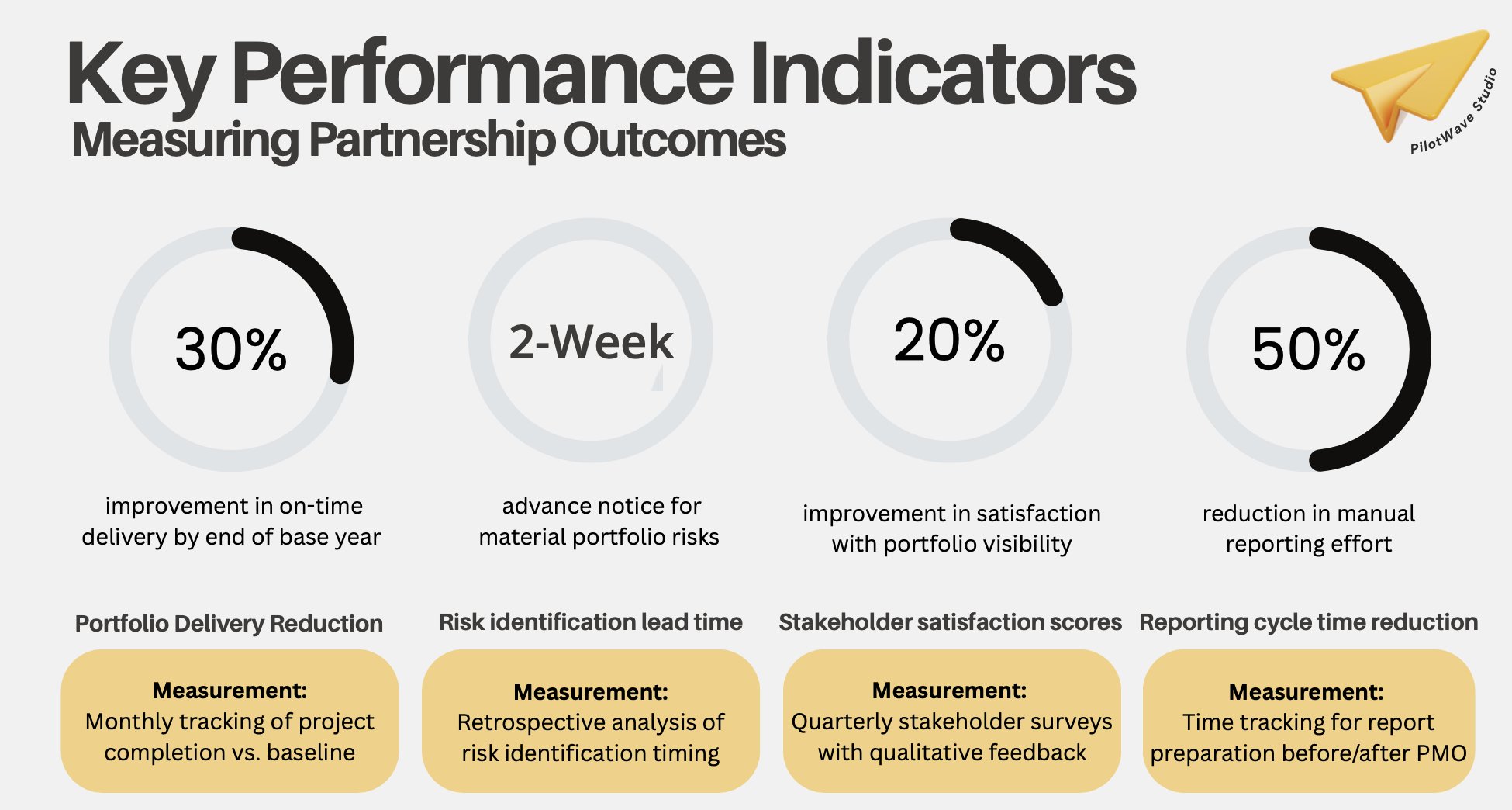
These were the targets we built into the proposal and committed to as a firm. Framed as outcomes EmerGenetics could hold us accountable to, not projections.
What I learned
The RFP brief said the biggest risk was creating overhead without demonstrating value. That one line changed how I thought about everything I was writing. Every governance layer I designed had to justify itself. Every reporting cadence had to serve someone specific, not just exist.
The hardest part of consulting is not the strategy. It is the rationale. Anyone can make a recommendation. Explaining clearly why that recommendation is right for this client, given their history, their culture, and their specific fears, is a different skill. This is where I figured that out.