Purdue Building Accessibility
A responsive website that lets Purdue students with physical disabilities report campus accessibility issues, check building accessibility, and stay informed about what's broken and what's been fixed.
Context
Purdue's campus has a physical accessibility problem. Elevators go out of service with no warning. Handicap push plates die and nobody reports it. Ramps exist on paper but are nearly impossible to find. The Disability Resource Center has an accommodation process, but it's slow, confusing, and puts all the burden on the student.
I was a sophomore when I noticed this. I started asking questions and realized disabled students were spending enormous amounts of time just trying to navigate a campus that was supposed to accommodate them.
This became our semester project in UX Learning Studio. I came up with the problem space, proposed the solution direction, organized and ran the co-design workshop, and led user interviews.
The problem
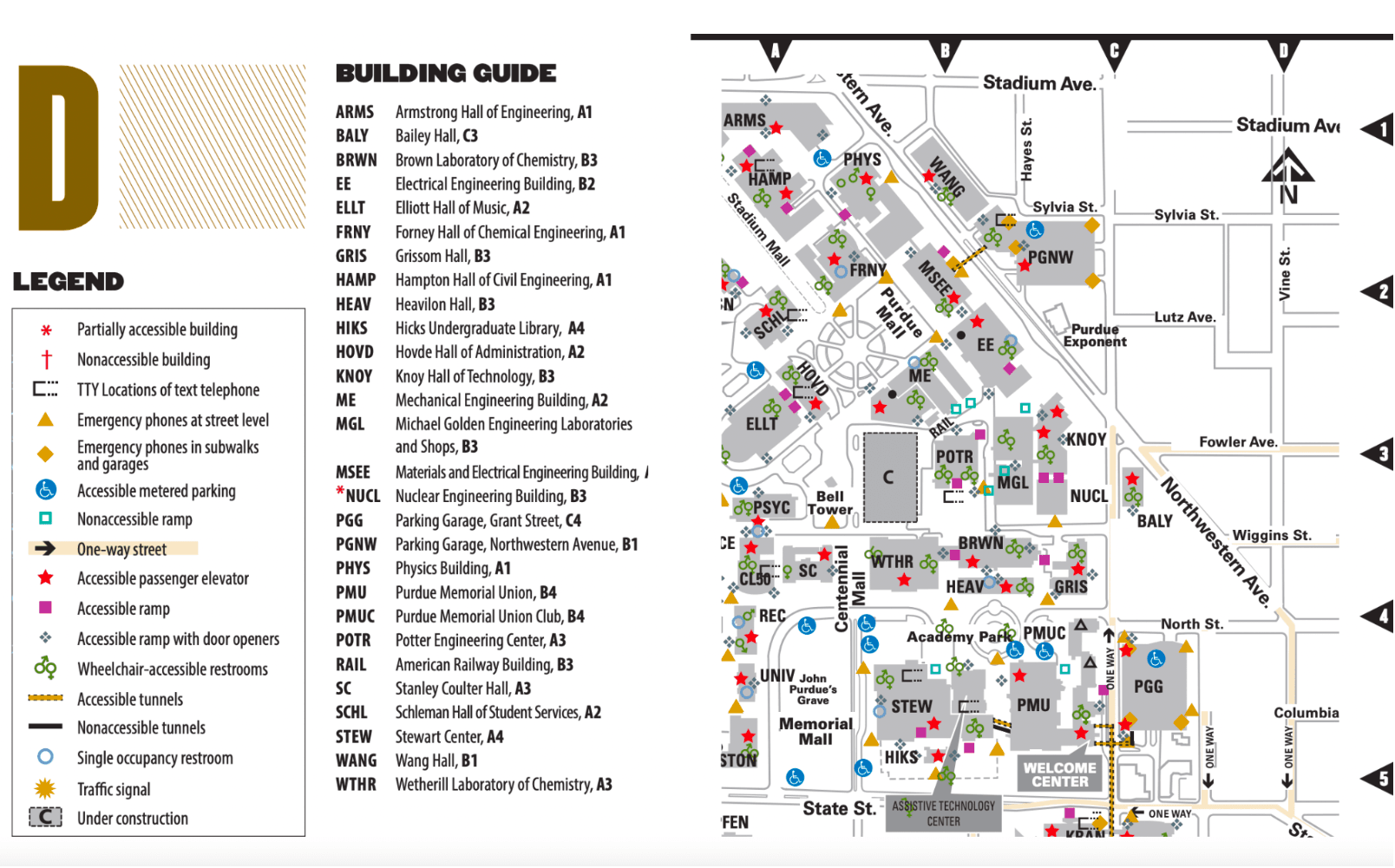
The existing resources were not working. Purdue's campus accessibility map was a dense, text-heavy PDF that was nearly impossible to parse. The DRC website had its own usability issues: we audited it and found around 10 to 12 accessibility violations including poor color contrast, missing alt text, and navigation that did not work well with assistive technology.
Beyond the digital problems, the real-world situation was worse. Students with physical disabilities were showing up to buildings only to find elevators out of order with no prior notice. They were walking loops around buildings trying to find accessible entrances. They were relying on word of mouth from other disabled students because no centralized, student-driven resource existed.
Research
I organized and ran a co-design workshop with Purdue students who have physical disabilities. We ran three activities: a live word cloud, a day-in-the-life exercise, and an open wishlist discussion.
The word that showed up most in the word cloud was "compromise." Students felt they were constantly accommodating everyone else instead of the other way around. They described having to explain their disabilities over and over to professors, to peers, to administrators. One participant said it plainly: it's hard to speak up for yourself.
On navigating campus specifically, students described running late to class because they could not find the one working elevator in a building. One participant described the Physics building having two elevators, one of which only goes up a single step and is essentially useless. Nobody tells you this before you show up.
The DRC's own issue reporting form was described as insufficient. There was no way to know if or when an issue would be fixed. Everything depended on students self-reporting, and even then nothing was visible to other students who might be heading to the same building.
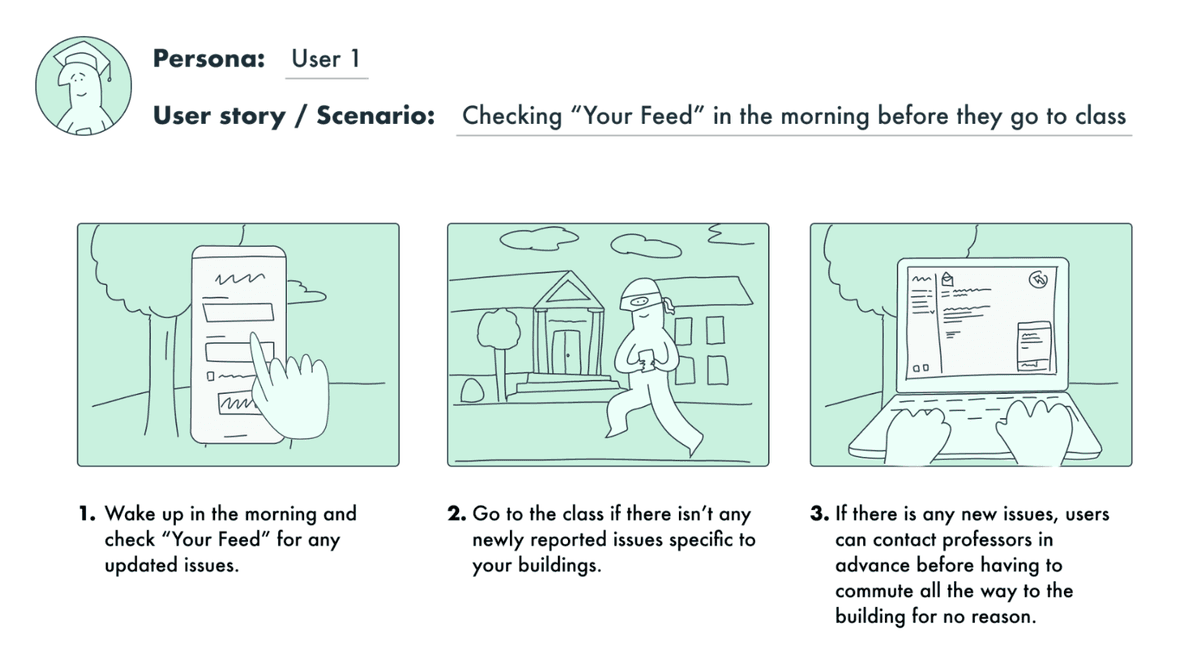
The clearest insight: students did not want another form. They wanted to know what was broken before they got there, and they wanted to tell others quickly when something new broke.
The approach
We started with early ideation around a community board where students could rate buildings and start threads. After a gallery walk and peer feedback, we narrowed the scope. We needed one strong core feature that could sustain itself.
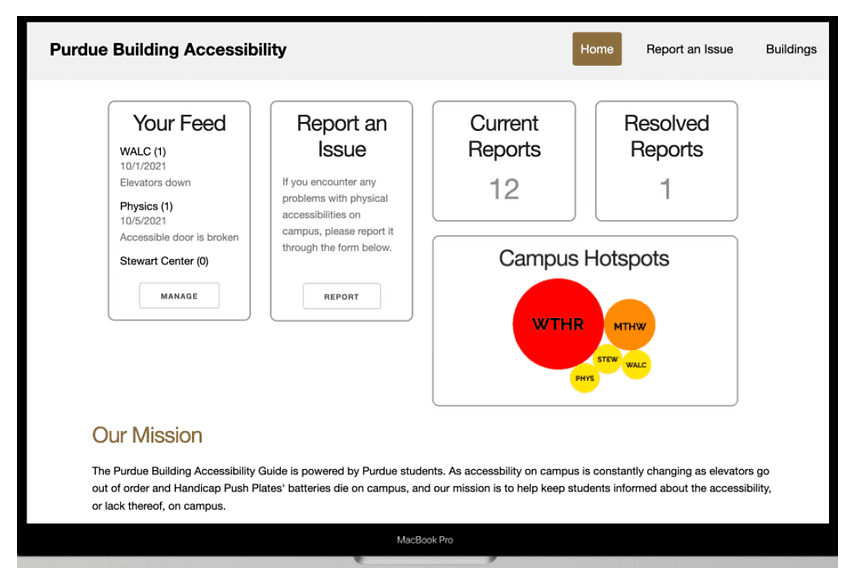
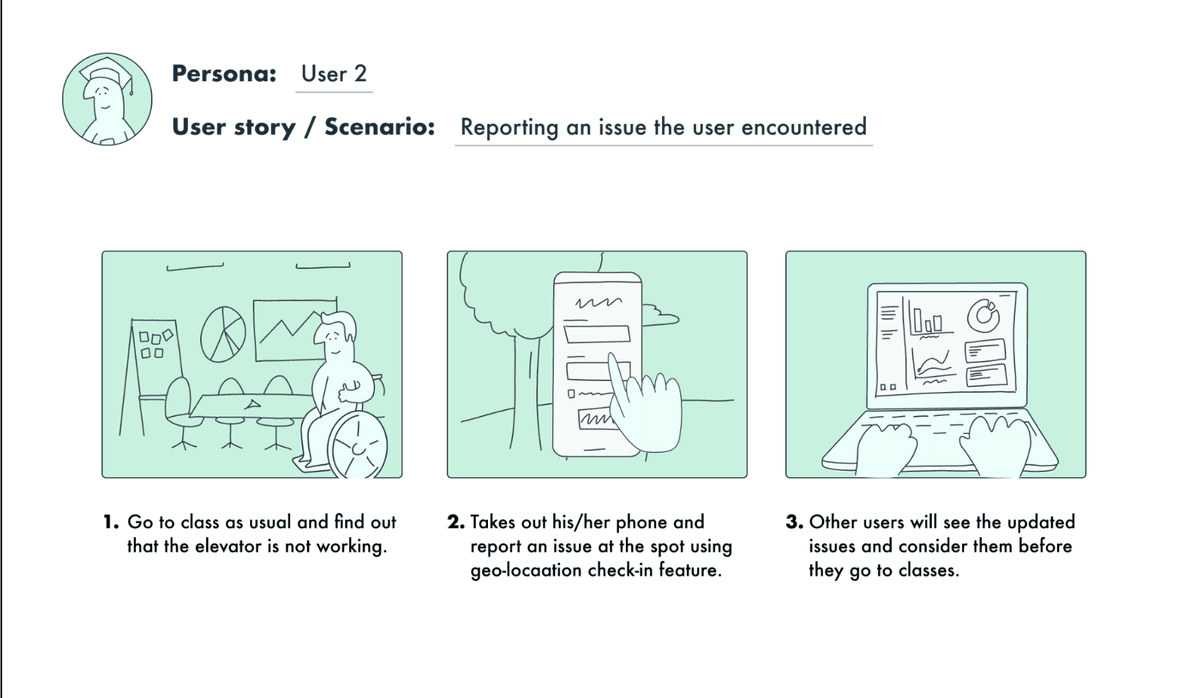
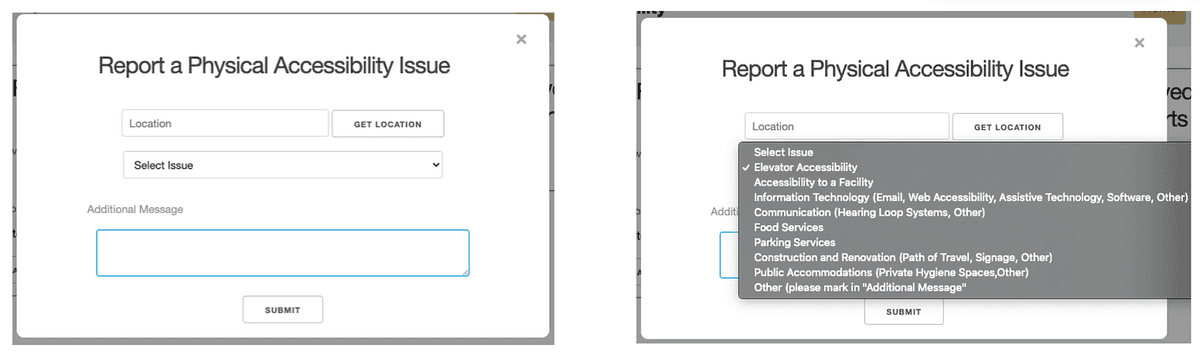
We landed on a reporting and awareness system. Students could report a physical accessibility issue on the spot using geolocation. That report would immediately appear on a live feed visible to other students, and would also update a campus hotspots visualization showing which buildings had the most unresolved issues.
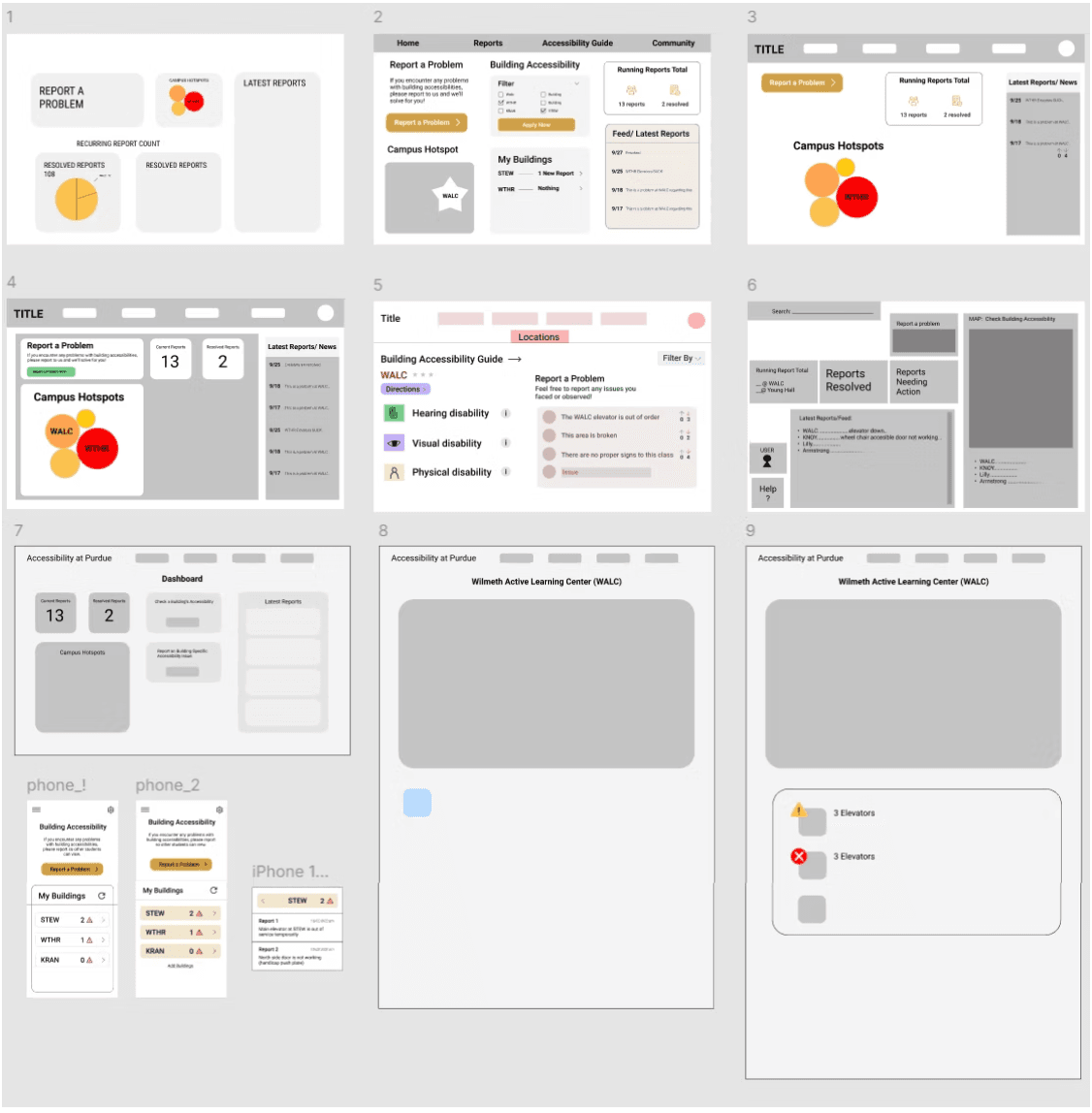
We wireframed in Figma, iterated based on two rounds of peer critique, and built toward a responsive design that worked on both desktop and mobile, because students are most likely to report an issue from their phone when they are standing right in front of it.
Final design
Your Feed
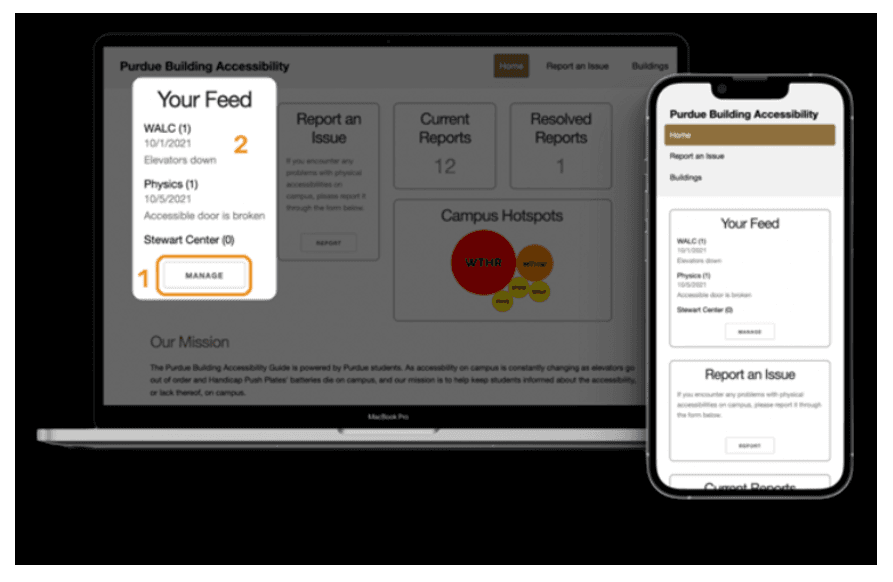
A subscription-based feature where students subscribe to buildings they frequent and see live reports.
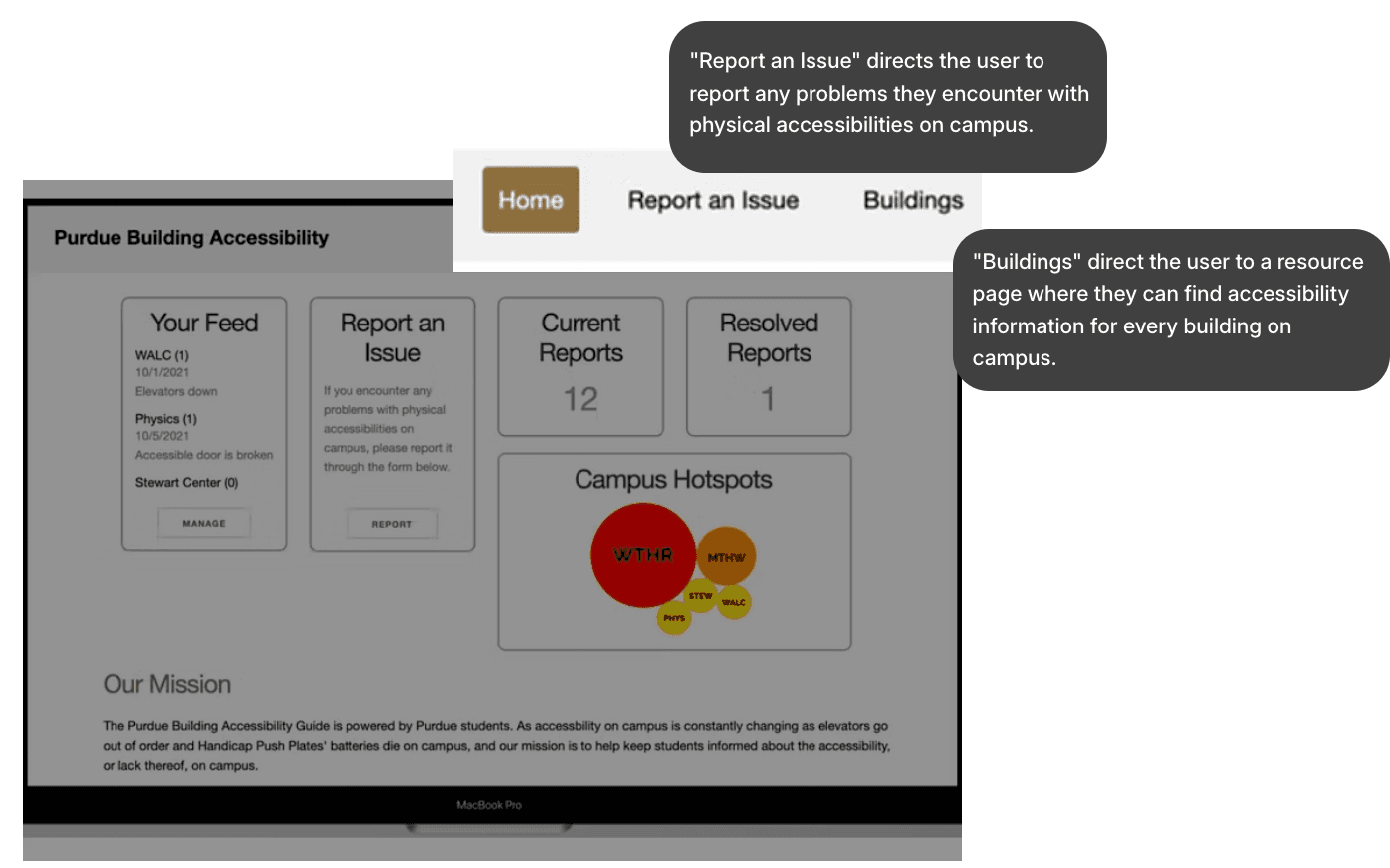
Report an Issue
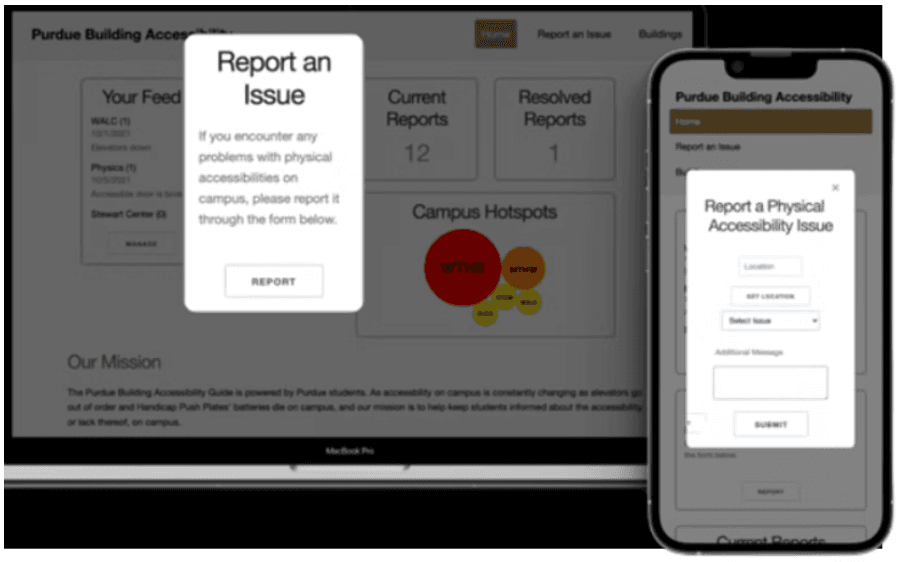
One button, no friction. Students can report directly from the homepage.
Issue Types
Current Reports
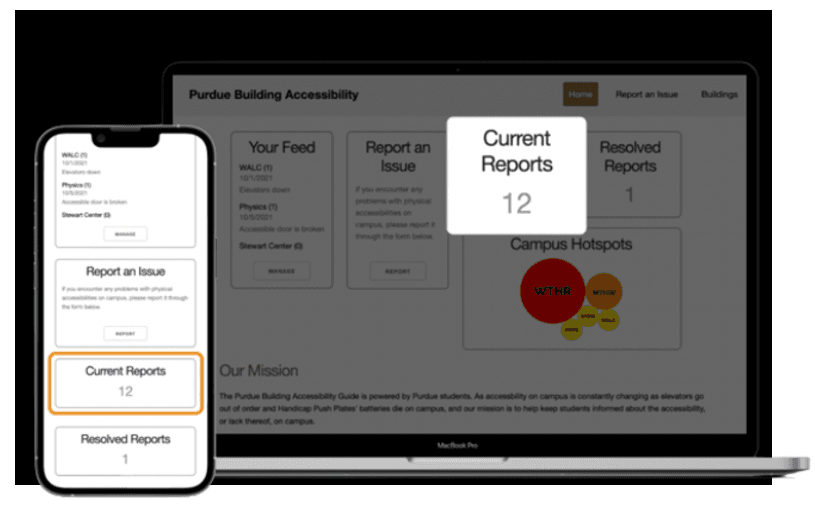
Updates in real time as issues are submitted.
Resolved Reports
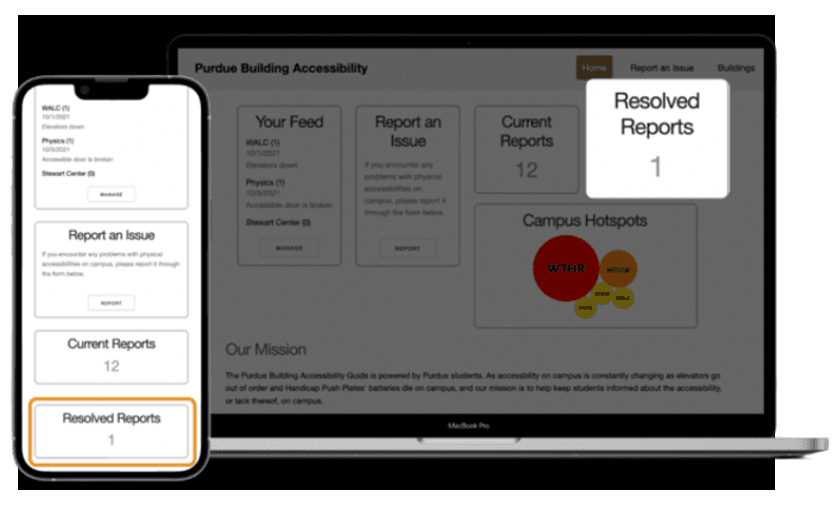
The gap between current and resolved makes the scale of the problem visible at a glance.
Campus Hotspots
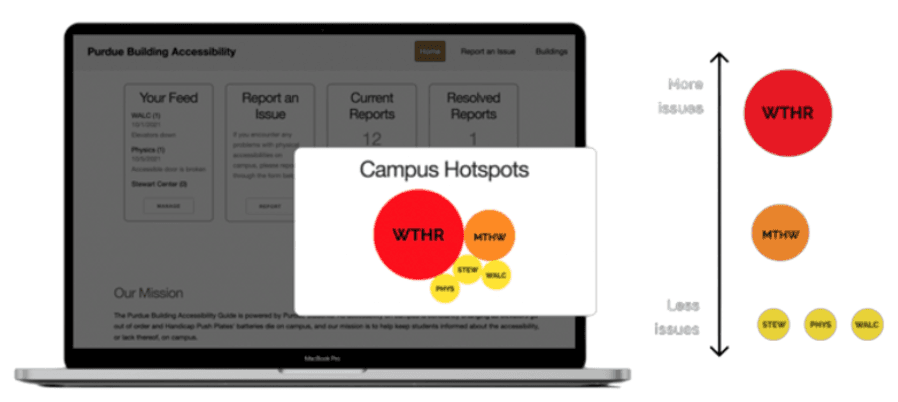
Bubble size reflects the number of unresolved reports per building. The bigger the bubble, the bigger the problem.
What I learned
Running a co-design workshop with students who have physical disabilities taught me something I could not have learned from secondary research alone. The problem was never just the buildings. It was the feeling of not being heard, of constantly having to adapt while everyone else moved through campus without thinking twice.
That shaped every design decision we made. We did not build a tool that reports issues to the administration and waits. We built something that gives students visibility into each other's experiences in real time, so they can make decisions before they even leave their dorm.
The WCAG audit of the DRC website was also a gut check. The very resource meant to support disabled students had accessibility issues of its own. That felt important to name and fix, even at the wireframe level.
If I were to take this further, I would want to test whether the geolocation reporting actually works in the moment, when a student is running late and stressed, not just in a usability session. That gap between lab behavior and real-world behavior is where the next round of iteration lives.